Showing posts with label Books for Younger Kids. Show all posts

Wednesday, July 08, 2015

I Bow To You, Bunjitsu Bunny

My reading of Tales of Bunjitsu Bunny is an example of marketing working. Author John Himmelman made a couple of appearances in Connecticut, which ended up on the Connecticut Children's Literature Calendar. I think I saw The Horn Book review, as well. So when I happened upon the book at the library, I snatched it up.


And I loved it.

Isabel trains in Bunjitsu. She is well trained. Each chapter is like a little zenny tale relating to how she integrates Bunjitsu into her life. I wonder if the chapters aren't actual adaptations of some kind of zenny stories. Well, not the takeoff on the tortoise and the hare. Unless, of course, the tortoise and the hare has some zennyness in its background, and I never knew.
 
Isabel's spin on martial arts reflects my experience of it. "Bunjitsu is not just about kicking, hitting, and throwing...It is about finding ways NOT to kick, hit, and throw," she says. This master who used to come to my taekwondo school spoke to us a couple of times about how his proudest moment was when he and some of his master buddies talked some street toughs in, I believe, Scotland out of attacking them. He wouldn't say how they did that, which would have been helpful, but you see my point. I am not at all surprised to see that Himmelman teaches a martial art, hapkido, which I know little about. Of course, I've been doing tai chi for two years now, and let me tell you, that's a mystery.

Someone in my family is going to get a copy of Bunjitsu Bunny when he's a little older. Oh, and look! There's going to be another Bunjitsu Bunny book out this fall.

Wednesday, June 10, 2015

A Little Darling Of A Book

I've read a few hunting-for-grandparent books over the years, beginning with Brendan Buckley's Universe and Everything in It by Sundee Frazier. I believe Penelope Crumb by Shawn K. Stout is the fourth. Years ago, some blogging buddy made a joke about three books meaning you had a new genre on your hands.

The other three books all involved children of mixed race, and the search for a grandparent involved identity. Penelope Crumb is a white child, and her search for her grandfather involves identity, too. Her father died before her birth, and she's never known his father. She becomes interested when she notices something about her appearance. She has a big nose. When her mother tells her she looks like the grandfather she's never known, she decides to hunt him down.

Penelope has a strong, well-defined personality. The book is written with subtlety and wit, particularly when you consider that it is marketed to students in the lower grades. Subtlety and wit are not often seen in books written for those kids. What do I mean by subtlety? Penelope is a first-person narrator who has a host of complaints about her older brother. Even so, we readers can see that the Alien has moments of almost caring for his little sister.

Three particularly interesting points about this story:

  • The nose. Penelope actually has a big nose, it's not just something she's concerned about as happens in many children's books. She's reasonably concerned about it, but at the same time, takes it in stride. Of course, she's in fourth grade, not eighth.
  • Graveyard Dead. Penelope often refers to people who are "Graveyard Dead" versus, say, people you might think are dead (like her grandfather) but aren't. Her father, for instance, is Graveyard Dead. Her father being Graveyard Dead doesn't distress her. It's more a fact of life.
  • Little Darling. Penelope is a well-loved child. Nonetheless, she has fantasies of loved ones saying things to her like, "Oh, little darling. Oh, my heart."  It's a fantasy that comes true.

Definitely my favorite hunting-for-grandparent book.

With illustrations by Valeria Docampo


Wednesday, March 11, 2015

Some Young Ones Are Going To Like This

Books for kids on the lower end of elementary school have improved over the years. Sasquatch and Aliens: Alien Encounter, a chapter book by Charise Mericle Harper has real wit and a legitimate story line. (Well, except for the underwear business at the beginning, which, though fun, sort of peters out.) Two boys, who are not exactly made for each other, stumble upon an alien in the woods. And later a sasquatch. And there's a logical explanation. One that is just a little bit disturbing.

Cartoons are liberally sprinkled throughout Sasquatch and Aliens. They do more than illustrate. They carry some of the story, replacing traditional text in the narrative. That ought to make this book attractive to readers who may not be that fond of reading.

Wednesday, October 29, 2014

I Did Some Reading For Halloween

I'm not big on reading holiday books these days. I'll often think that it would be nice to read something related to Christmas during December, but my mind runs to things like Hogfather and I never get around to reading even those. I ended up reading Zeke Meeks vs the Horrendous Halloween by D.L. Green with illustrations by Josh Alves because I heard on Facebook yesterday that the eBook edition was on sale for 99 cents. I love an eBook sale and Zeke Meeks is a series for young readers, something I was interested in a few years ago.

And thus I read a Halloween book.

ZM vs the Horrendous Halloween is a book for kids in the early grades. It involves a realistic story about one thing after another going wrong for Zeke on his big day, Halloween. Nothing is random here. Everything that's brought up about a character is used at some point. There is a dry, sly humor that works and good use of recurring material. I'm thinking, for instance, of the Princess Sing-Along lyrics, which I liked from the very beginning. "Don't feel that you have to change. It's okay to act real strange." 

Zeke Meeks vs. the Horrendous Halloween was quite a nice Halloween surprise because it's different from so many of the other books for this age group I've seen, books that didn't involve any kind of intelligible story because of the random action, characters, and so-called humor. If The Horrendous Halloween is representative of the rest of the series, other Zeke Meeks are worth giving a try.

Regarding the eBook edition: Some eBooks with illustrations don't translate terrifically to the eBook format. This one was just fine. The 99 cent sale is supposed to be continuing this week, though I don't know when the week ends. 


Thursday, June 26, 2014

Environmental Book Club

I've written here about liking an immersion-type thing with environmental books, books that don't wear a sign saying "It's eco-time" but just make readers part of a natural world or lifestyle. Maybe what I'm thinking of is some kind of wholistic experience.

That's what I think happens with Mouse and Mole: Fine Feathered Friends by Wong Herbert Yee. The book has a Frog and Toad vibe, which is good, though wordier. Fine Feathered Friends is all about Mouse and Mole watching birds. And drawing them. And writing poetry about them. The whole thing.

Over the course of a story about the two friends having to find a way to get close to the birds they want to draw, Mouse and Mole pass off a small amount of avian info. But what really makes this book at all environmental is that Mouse and Mole want to do this bird stuff. They want to draw them and write about them. They want to have a life that involves birds.

Listen, when I had little kids, I would have read them this book, got out their artists' journals (yeah, we all had artists' journals), and gone out with them to find us some birds. It would have worked as an environmental book for me.

Thursday, June 19, 2014

Environmental Book Club

Suzy Kline wrote an interesting post for the Authors for Earth Day blog. In Love Every Living Thing, she writes about Horrible Harry's love of nature.

It's been years since I've read a Horrible Harry book, so I can't address the issue of just how great his interest in environmentalism is. But I like the idea of appreciation of nature/environmentalism being a thread within a story, as Kline describes.

Saturday, December 15, 2012

A Good Easy Reader Is Hard To Find

I have "known" Melissa Wiley of Here in the Bonny Glen for years. She's written five books, three of which came out this year. Fox and Crow Are Not Friends is the first that I've read.

This clever Step into Reading book uses three tidy chapters to show Fox and Crow interacting in nonfriendly ways. At the same time, the book is a complete story with a climax and surprise reveal. The images don't just illustrate text but really do carry part of the storyline. The reveal makes sense in terms of the illustration. At the end of the story, we suddenly ask ourselves, Ah, yes. Where did the cheese come from?

And this little volume is full of literary references, starting with its title. Fox and Crow Are Not Friends calls to mind Frog and Toad Are Friends the first of the Frog and Toad  I Can Read books by Arnold Lobel. I once saw this series referred to as the best I Can Read books ever written. The chapter title A Good Smell Is Hard to Find has to make adult readers think of Flannery O'Connor's A Good Man Is Hard to Find, a short story I've never understood. Another chapter title, Revenge Is a Dish Best Served with Cheese is a play on "revenge is a dish best served cold," which is not a Klingon proverb, people! And the reveal at the end, which I don't want to give away--did it not make anyone else think of the Berenstain Bears?

I hope we'll see more Fox and Crow books in the future.

Fox and Crow Are Not Friends is a Cybils nominee in the Easy Readers/Early Chapter Books category.

Thursday, December 06, 2012

More From Ivy And Bean, Two Of My Favorite Girls

I have been a fan of the Ivy + Bean books by Annie Barrows for years. As I said back in 2007:

"Bean could be described as a Junie B. and Clementine type of child in that she tends to go her own way. Her creator describes her as "loud and wild." The difference between Bean and the other leads in the big, girl series is that Bean is comfortable with who she is. She isn't always anxiously interacting with adult characters who reassure her in some way or are involved in helping her learn a reassuring lesson. Most of Bean's interaction is with another child and not adults. She interacts with Ivy, her co-lead, who, superficially, is your stereotypical quiet little girl.

Yeah, your quiet little girl who is into magic and potions, and who is sharp as a tack. Talk about still waters running deep." 


Their eighth book, No News Is Good News, is more of the same, and the same is very good. Ivy and Bean want to take part in a school fad that requires money. Their first plan to make some involves selling potions that Ivy would make. Surprisingly, that doesn't work. So they fall back on creating a neighborhood newspaper, as Bean's father did when he was young. They grasp the concept of selling subscriptions right away. That they will have to provide something to the people who paid up comes as something of a surprise to them. They also struggle with the concept of "news."

Yes, stories about child-run newspapers have been done before. But not with Ivy and Bean.

Ivy + Bean No News Is Good News is a Cybils nominee in the Easy Readers/Short Chapter Books category.


Monday, January 30, 2012

Classroom Buzz For Fangbone

I passed my arc of Fangbone on to a family member who teaches reading, primarily to children who need some extra instruction in the subject. I was aware that she had a student who is interested in becoming a cartoonist, and Fangbone is a graphic novel.

I learned this weekend that the first time he read the book, the boy didn't get much out of it. But he read it a second time, at which point it was clear that he was comprehending and enjoying what he was reading. In fact, he became an enthusiastic fan, anxious to read the second volume in the series (which has already been published) and wondering why their school library didn't own those two books. (Our family member suggested that he write to the librarian about the issue.) Not to worry. The young man's father purchased Kindle versions of both the first two Fangbones, so they're available whenever he wants them.

This boy is so taken with this book and has discussed it so often that now other children in his class, children who don't have difficulty reading, are interested in reading it. Our family member also thought it was noteworthy that this is a class of fourth graders, and the book is set in a third-grade classroom. She wouldn't have necessarily expected kids to be interested in reading about characters who are younger than they are. Certainly conventional wisdom tells us that children read up, not down.

But evidently the little barbarian in Fangbone can deal with that issue.

Friday, January 06, 2012

A Little Barbarian


Yesterday was publication day for a clever little graphic novel for younger readers called Fangbone! Third-grade Barbarian by Michael Rex. Actually, it was publication day for the second book in the series, too, The Egg of Misery. I received an advanced galley of the first book last month.

In Fangbone's barbarian world, he isn't taken seriously as a warrior because he's a child. He's enthusiastic but treated as a servant. He's ambitious, though, and plans to one day have his own army. When his leader is ordered by the clan master to send someone to another land to hide the big toe of Drool (what that's about is slowly revealed--no info dump at the beginning of the story), the older barbarians feel they are all too adept at fighting to leave the battle. So Fangbone volunteers to become the protector of the toe.

The other land where he's sent to hide? Ours, where he ends up in a third-grade classroom where this little barbarian fits in amazingly well.

Fangbone is the kind of time/world travel story I enjoy. I much prefer seeing someone from the past or another reality arriving in the here and now than someone from our time/world going somewhere else. The outsider/outcast perceiving and commenting on our real society is far more intersting to me than a character perceiving and commenting on a society that no longer exists or even never existed.

We do get commentary here. Bullies? A third-grade barbarian doesn't have to worry about them much, and not because he's violent. It's that barbarian attitude that takes care of threats. Bill, a boy with ADD, takes Fangbone under his wing, explaining toilets to him (You didn't think they'd have those in a barbarian world, did you?) and giving him his first taste of hot wings. Fangbone is flummoxed when Bill's mother asks for the magic word. He knows many, but "please" isn't among them. And when Fangbone is called upon in class to ask a question about why the sun rises, his response is a sort of creation story from his culture. It's the truth, as he sees it, and the episode raises questions about respecting the beliefs--any beliefs--of others.

One of the things that makes this book work for me is that there is a real story here. Sometimes with books for younger children you get a lot of jokes strung together. Fangbone has a mission. A mission has its own narrative drive.

Another aspect of the book I liked is that the graphics truly carry their weight by helping to tell the story. I don't care to see a lot of boxes with traditional narrative at the top, leaving the images to just illustrate text. With Fangbone we can pick up setting, action, and even character through the graphics. What a face that little Fangbone has.

Plot Project: A week or so ago, I read a review in which the reviewer talked about a premise giving direction to a plot. I think that could have happened here. Once the author came up with the idea for a barbarian in a classroom, the next logical step to plotting would have been to think of a way to get him there. Once he came up with the way to get him there, he had his character's mission. And with the mission would come a plot.

Wednesday, August 03, 2011

So That's What Happened After Happily Ever After


For decades, feminist writers have speculated about what became of Cinderella after she married her prince. Her situation was perceived as being full of peril, and that was before anyone had heard of the late, lamented Diana, Princess of Wales. In Cinderella and the Mean Queen, part of the After Happily Ever After Series by Tony Bradman, she has trouble with her mother-in-law (Yikes! Diana!) and works things out by starting her own business doing cosmetic and clothing makeovers. The feminist in me thinks, How shallow to put so much focus on physical appearances. But the writer in me thinks that's very clever, since the fairy godmother, or whatever it was she was, did a makeover on Cinderella in the original fairy tale.

I also read Goldilocks and the Just Right Club, Mr. Wolf Bounces Back, and The Fairy Godmother Takes a Break. These books are meant to be instructive on many levels. They all have a reading level between grades two and four+, and they include a glossary, discussion questions, and writing prompts. And the basic stories themselves are probably a little improving.

But I'm not going to hold any of that against these books because they are actually entertaining reading and well written. It's not easy doing a coherent, well crafted story for early readers, and these books are that. And clever, too. Goldlilocks, for instance, vandalized the Three Bears' home because of problems at school. When her parents transfer to another one, who does she meet there but Baby Bear? And the Big Bad Wolf ends up with work problems because once he becomes a father, all the creatures he would normally be offing (the little pigs, Red Riding Hood) remind him of his darling offspring. He's good for nothing after that. (I read that one while reading Dust City, a YA book that also makes the Big Bad Wolf a father, but uses that idea very, very differently.)

I had a family member home who is a teacher working with children with reading problems. While she liked the book in this series that she read, she felt that in spite of the glossary, some of the vocabulary might still be a problem for her students. She pointed out the word "kettle," for instance, which she didn't believe her students would know and which doesn't appear in the glossary. However, teachers who work with struggling readers could use these books while providing support. Adults who are looking for books for very young children who are reading early but still have young interests should check them out, too.

By the way, every page has a black and white illustration by Sarah Warburton, so readers aren't overwhelmed by lots of text.

Tuesday, June 14, 2011

A Truly Horrid Child


I mentioned recently that I've been reading more YA than younger children's books because my local library purchases a lot of series titles, which just don't attract me. However, I made an effort and tried a couple of books from the Horrid Henry series.

I think it's fair to say that that title pretty much sums up the star of these books. Henry really is horrid. You know, a lot of kids' books will be about some nasty sprite who is redeemed in the end, and we can all feel warm and fuzzy about it. Not Henry.

I respect that.

It took a while for me to warm to the first book because the author, Francesca Simon, uses a lot of cute names for her characters like Perfect Peter and Moody Margaret and, well, Horrid Henry, for that matter. But I'm willing to concede that child readers may like them, and the books are for them, not for me. What won me over is that the books are collections of short stories, and Simon really is able to write short stories for younger readers around child subjects.

Henry's unrelenting horridness works for me, too. Simon has broken the writing rule about creating a main character readers will want to identify with, and good for her. I doubt identifying with Henry is why kids read these books. I think the draw here is that children know horrid kids. The mere fact that these stories of a horrid child exist validates readers' experience. These books prove that the adult world knows about the Horrid Henries of this world. They're writing books about them instead of making them straighten out, but, still, it must be a relief to read these things and think, There. Someone else knows a guy like the monster in Ms. Dufrane's classroom.

I was discussing these books at lunch Saturday and misspoke because of the familiarity between the title of this series and the one about Horrible Harry. It's been years since I've read a Horrible Harry title, and I don't recall him being as truly dreadful to child and adult alike as Horrid Henry is. One of my lunch companions asked if Horrid Henry is British. Indeed, he is. Notice the cover above with the title Horrid Henry and the Bogey Babysitter? The book I read was called Horrid Henry and the Scary Sitter, obviously translated into American from the British.

Thursday, December 09, 2010

Round 'Em Up

In my fantasy life, I keep up each week with the Sunday Round-up of Middle Grade Fantasy and Science Fiction at Charlotte's Library and the monthly I Can Read Carnival, which I believe moves from blog to blog, though I'm not sure of that.

Monday, May 03, 2010

A Dignified Series For Younger Readers


In spite of the use of the word "underpants" and "barfed" in the titles, these two books from the Uh-oh, Cleo series by Jessica Harper are head and shoulders above many books written for new readers. Cleo's stories are real stories that deal with real-life situations. They are not merely a string of lame jokes strung together with little plot. They have honest-to-God beginnings, middles, and ends. There is, believe it or not, a logical reason for Cleo and her siblings to jam underwear on their heads in Underpants on my Head. The undergarments aren't just thrown in there the way they would be in other books of this type because, hey, everybody knows kids like butt jokes. Poor Cleo has a weak stomach, mentioned in both books, and it takes center stage in I Barfed on Mrs. Kenly. So, no, the book isn't an excuse to use the word "puke" as many times as possible.


Both books give the impression that they are not just random efforts. In Underpants on my Head Cleo says, "I like to read too, but I'm not interested in all those wizard books. I'd rather read books about regular kids who lose their pet or there's a bully in their class or something. You know, normal stuff." That is definitely what these two books are about--normal stuff. And at the end of both books, Cleo talks about how what just happened to her feels like a story or a tiny book inside her and speculates about how many of these books she'll have inside her by the time she's an adult.

This is an author who seems to be trying to tell kids that fiction can be rooted in life, in reality. On the back flap of Underpants on my Head, you can check out a photo of eight-year-old Jessica Harper with her head pretty much covered with what looks like a pair of white cotton girly briefs. If I were playing teacher, I'd have some of these books in my classroom to use in a writing unit on using experience in fiction.

Some drawbacks: Cleo doesn't have a great voice. She's a little on the bland and flat side. What she does have is a large number of siblings who can be hard to keep track of. And mink coats figure prominently in I Barfed on Mrs. Kenly. I found that a little retro, myself, as if it came out of a sixties sitcom, because my experience of the suburbs and small town American life these last couple of decades has been pretty much mink coat free. I don't know if a lot of kids these days experience their parents' friends arriving for an evening and piling the minks on the bed.

But even with those complaints, these books should make good reading for young readers, especially those who, like Cleo, would rather not read fantasy.

While we're on the subject of books for younger readers, you might want to take a look at the April I Can Read: A Carnival Celebrating New Readers at Jean Little Library.

Training Report: Almost through with a chapter that has been an absolute ordeal for a couple of weeks. I'm wondering if an author writing the same dinner scene over and over again would make a decent short story. I must remember to write that idea down in my writer's notebook. But I probably won't.

Wednesday, February 03, 2010

Roundups For The Littlies

The Reading Tub's Blog has started a monthly carnival of easy readers and short chapter books, which it is calling I Can Read. While at the January post, I learned that the Jean Little Library blog has a post on all the Cybil nominations for easy readers and beginning chapter books with links to reviews.

I became interested in chapter books while I was writing a couple of books for kids in the early grades. It seemed to me that a lot of the books written for younger kids are...well...not terrific. I read a dreadful early reader back in December, as a matter of fact. I was shocked...shocked, I tell you...by how bad it was. On top of that, these easier books don't seem to get a lot of attention from adults. Middle grade and YA are the hip and happening categories, probably because they're closer to what we like to read for ourselves.

Wednesday, October 28, 2009

Quick! I Have Books Due At The Library!

I did a little graphic novel reading this fall, and I can't renew the books at the library again, so I guess I'd better blog about them, if I'm going to.


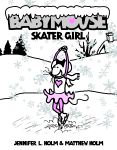
First, I read a couple of the Babymouse books by Jennifer L. Holm and Matthew Holm. I think what makes these books work is that they are graphic novels. While the stories are fine, the basic plots of the two I read, Skater Girl and Puppy Love, weren't particularly unique. But joining those plots with the graphics and the mouse, definitely elevated them.

I found it a little unusual that the books sometimes use a third-person narrator who speaks directly to Babymouse and wondered if kids found that confusing. Presumably not, since there are a lot of Babymouse titles.


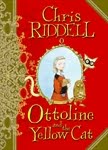
Our library classifies Ottoline and the Yellow Cat by Chris Riddell as a graphic novel, though I think I'd describe it as more of a heavily illustrated novel for younger readers. It's a beautiful looking book with an interesting basic story, though I could have done without the Cousin It-like character, myself. Readers frequently have to stop reading to study the illustrations, which do, indeed, sometimes tell part of the story. (Though sometimes they're just illustrations.) I wondered if young readers would find that frustrating. On the other hand, a young, not-very-enthusiastic reader might find it a relief to stop and enjoy the scenery.

If you go to the Original Artwork From Children's Book Illustrators site, be sure to watch the slideshow of Riddell's Illustrations to Unwritten Books. It's very clever. Among my favorites...Hot Comfort Farm and Wuthering Tights. But there's lots of good stuff there.

Friday, May 29, 2009

A Lovely Little Find


I was in the library earlier this week, looking at all the special powers books on the new books' shelf in the children's area. By which I mean books about kids learning they have special powers or having special powers and going to special schools to develop them or kids in some kind of fantasy world full of special powers. I understand that children enjoy reading the same kinds of things over and over, and I respect their desire to do that. But, man, it's hard for an adult working in kidlit not to keel over from the sameness of it all.

So imagine my delight when I saw a book about something so mundane as writing thank you notes. Really, we have gotten to a point in children's literature where the mundane is unusual.

Some people might think that Moxy Maxwell Does Not Love Writing Thank-you Notes by Peggy Gifford is a little gimmicky. The chapters are short with titles that sort of bleed into them. Take Chapter 25, for instance:

Chapter 25

In Which Mark Says No

"No."


Plus, young Moxy falls asleep at odd times. And the book uses a third-person narrator who sometimes intrudes into the story.

Other people might point out a couple of stereotypes, like the odd little sister and the divorced dad who makes plan to see his kids but never carries through with them.

However, Moxy Maxwell isn't trying to be Anna Karenina (which, to be perfectly honest, I've never been able to get through). Moxy Maxwell is trying to be a light, clever, amusing story about a girl who is close to over-the-top but in a funny way that doesn't have time to get annoying because the book is so short. And it does that very well.

There's a real storyline here about poor Moxy, who must finish writing her Christmas thank you notes before heading to California with her brother to finally visit their father, a former soap opera actor who is out in Hollywood hunting for a Big Deal. We're not talking random jokes or actions, which is what you sometimes find in books for this age group. But what's most admirable about this book is that it's a funny story for younger kids that treats its readers with respect. The author doesn't assume that child readers only laugh at toilet humor and funny sounds. This is lightish entertainment that a kid doesn't have to feel embarrassed about having read.

And a word about the illustrations, which are photographs by Valerie Fisher--the pictures are supposed to be taken by Moxy's brother as the story is taking place. What we have is a little mixed media going here, and it works better than some more sophisticated attempts that I've seen.

I read a paperback edition, which would be perfect for tucking into a camp trunk this summer, or bringing along for a family vacation.

Tuesday, November 11, 2008

Possession For Kids?


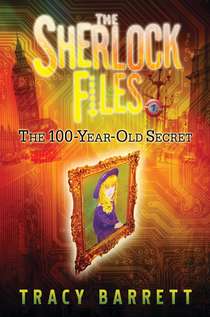
The 100-Year-Old Secret by Tracy Barrett is the first in a series called The Sherlock Files because the two main characters, Xena and Xander Holmes, learn they are descendants of Sherlock Holmes and set to work solving one of his unsolved cases.

I found the Sherlock Holmes connection problematic. Anyone familiar with Sherlock Holmes will doubt he had any descendants because, 1. he was fictional, and 2. in the stories he doesn't come close to having any kind of relationship that would produce offspring. (That includes Irene Adler.) So for the basic premise of The Sherlock Files to work, some kind of alternative history needs to be provided in which Sherlock Holmes is real and did, indeed, produce heirs. Nothing like that appears in the first volume. There are references to some Holmes' stories--a pub is named The Dancing Men, for instance, (The Adventure of the Dancing Men ) and Dr. Watson's young descendant has red hair (The Red-Headed League), but beyond that, I didn't see any what you'd call world building.

Now, an argument could be made that young readers won't be familiar with Sherlock Holmes, anyway, so they won't have any problems with the lack of logic behind the story. But if they aren't familiar with Sherlock Holmes, why does the whole Holmes' business need to be there?

Putting the Holmes' set-up aside, I actually liked the art history mystery in The 100-Year-Old Secret. The kids hunt for a portrait missing for a hundred years. The art talk is interesting. And the minor, nonrecurring characters who provide information about the long-dead artist are far more realistic and able to hold this reader's attention than the members of the Society for the Preservation of Famous Detectives, who I suspect are going to turn up in later adventures. A story about contemporary characters solving a mystery about a historical arty figure--with kids--has real potential, I think.

I picked up The 100-Year-Old Secret because I thought it looked like a mystery for younger readers. Though Amazon describes it as being for 9 to 12 year olds, I think kids on the younger end of that range will appreciate it best.

The second book in the series will be published next May.

Friday, October 31, 2008

A First Creepy Doll Story


As luck would have it, I just finished reading a book appropriate for Halloween posting.

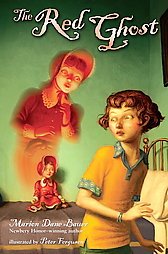
The Red Ghost by Marion Dane Bauer is a Stepping Stones Book. "Build the bridge to chapter books...," the publisher says. So we're talking a book for young 'uns here.

Earlier this week, anonymous and I were talking about whether or not books for children and YA readers need truly new and unique story lines because much is new to less experienced readers, anyway. I understand that everything's new when you're too young to vote, but I find it difficult to judge how good a book for a younger audience is when its plot and/or characters and/or setting have been done to death.

The Red Ghost is an example of a book that is using a story line that's been done many times before but doesn't come across as the same old, same old. The Red Ghost is a creepy doll story, and, yes, indeed, a lot of us older folks have seen it before. But Dane Bauer manages to create a real sense of tension here that I don't usually see in books for kids this young. This is a short, complete mystery that the kid characters manage on their own. You've got what is really a simple plot, a limited number of characters, and a setting that is rooted in one place, all necessities, I think, for a book for kids in the lower grades.

Many books for this age group are just silly and pointless. The good ones tend to be very realistic, sometimes with adult characters helping child protagonists learn feel-good lessons. The Red Ghost is a genre novel for the very young. I don't think I've seen many of those, and I was quite taken with the novelty of it.

Like many early chapter books, this one has a number of illustrations. Peter Ferguson's black and white drawings definitely show the feelings of the characters portrayed. He created a great-looking main character, a neighbor who is a dignified, contemporary older woman, and a doll that looks as if she's got something on her mind.